.webp)
Has Your Guinea Pig Suffered An Injury? Get Instant First Aid Online
Cuts, bite wounds, bleeding, swelling, limping or difficulty moving may indicate a traumatic injury. Early treatment can prevent infection, reduce pain and promote faster healing. Talk to an exotic pet vet online instantly, 24/7.
Consult Now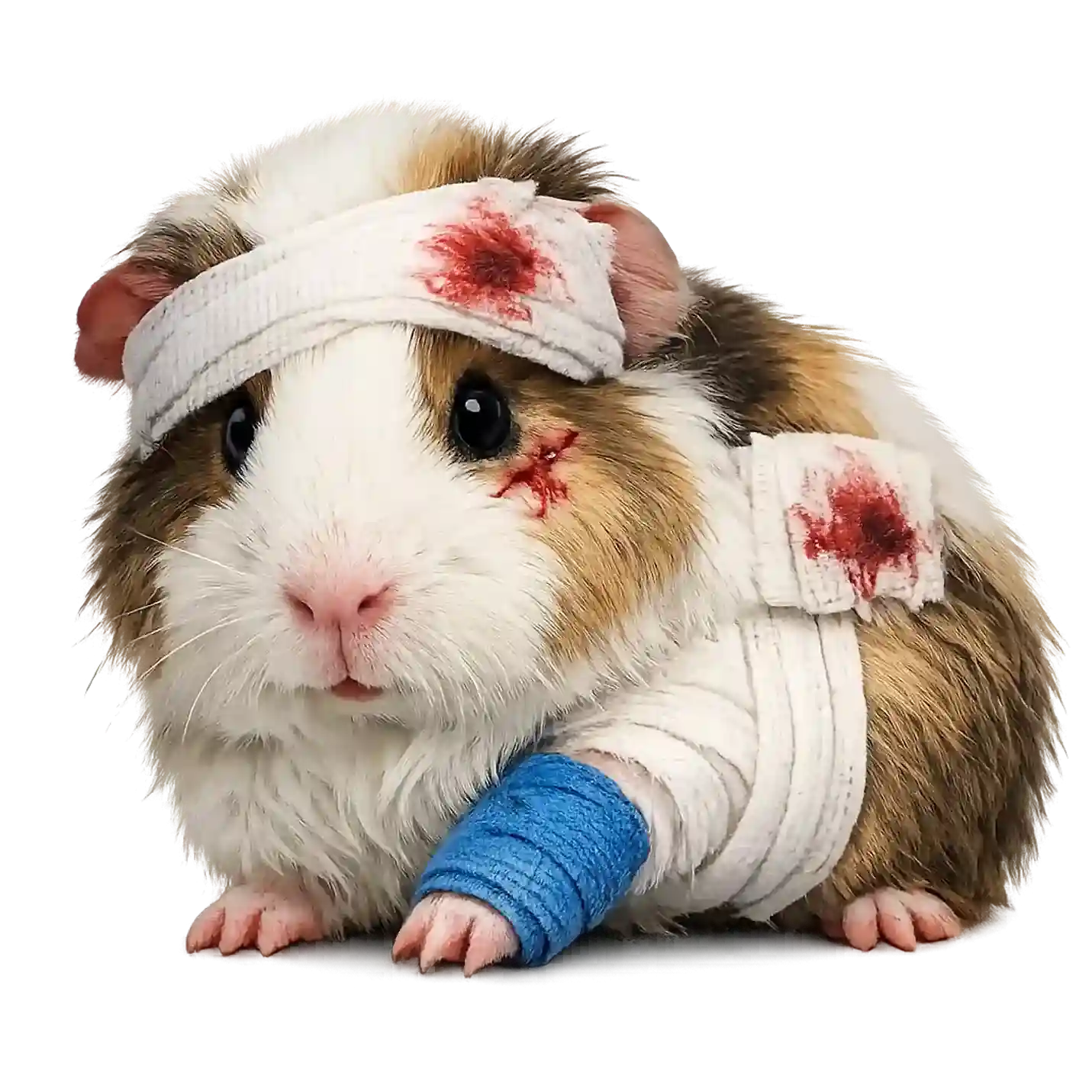
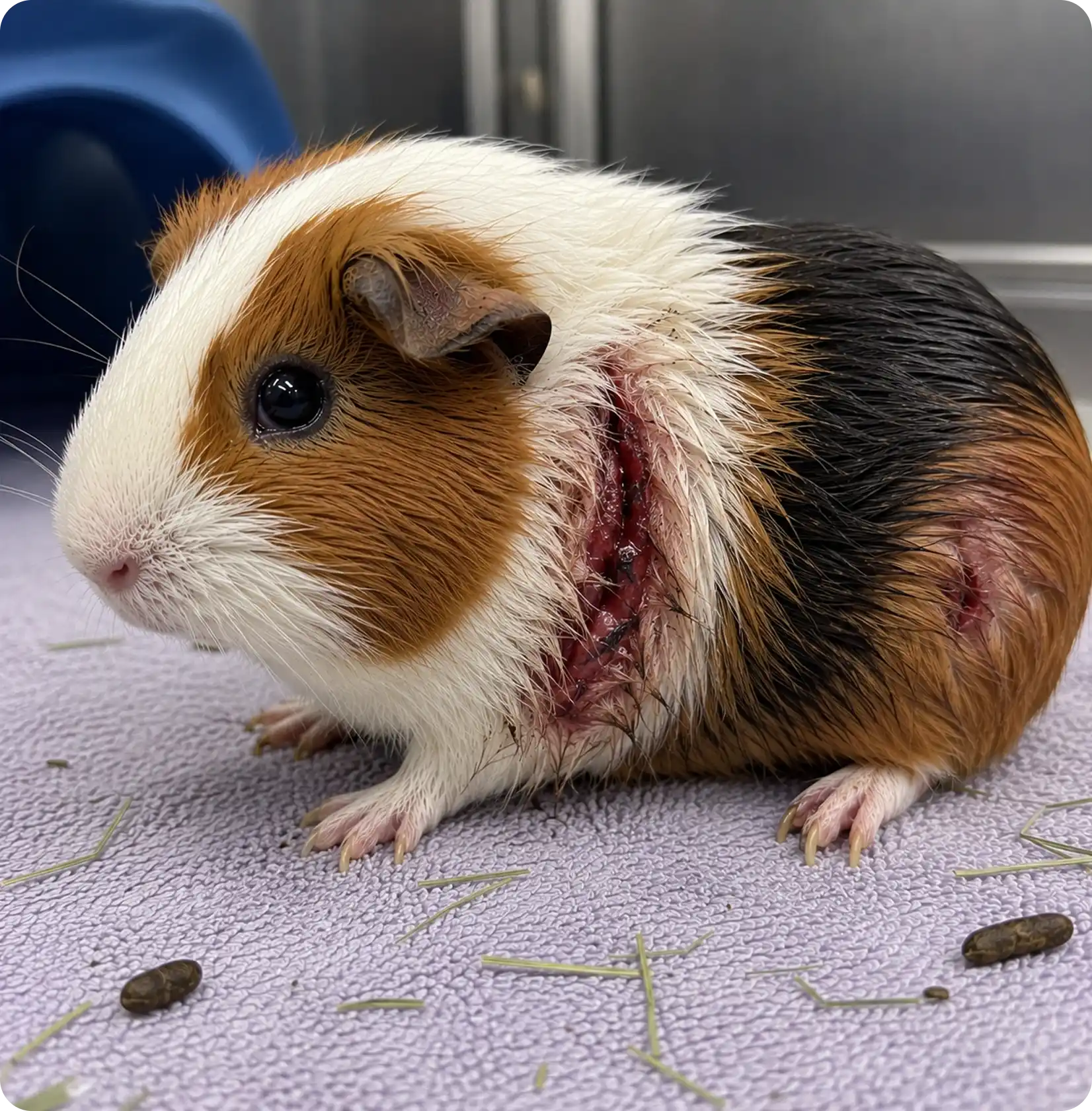
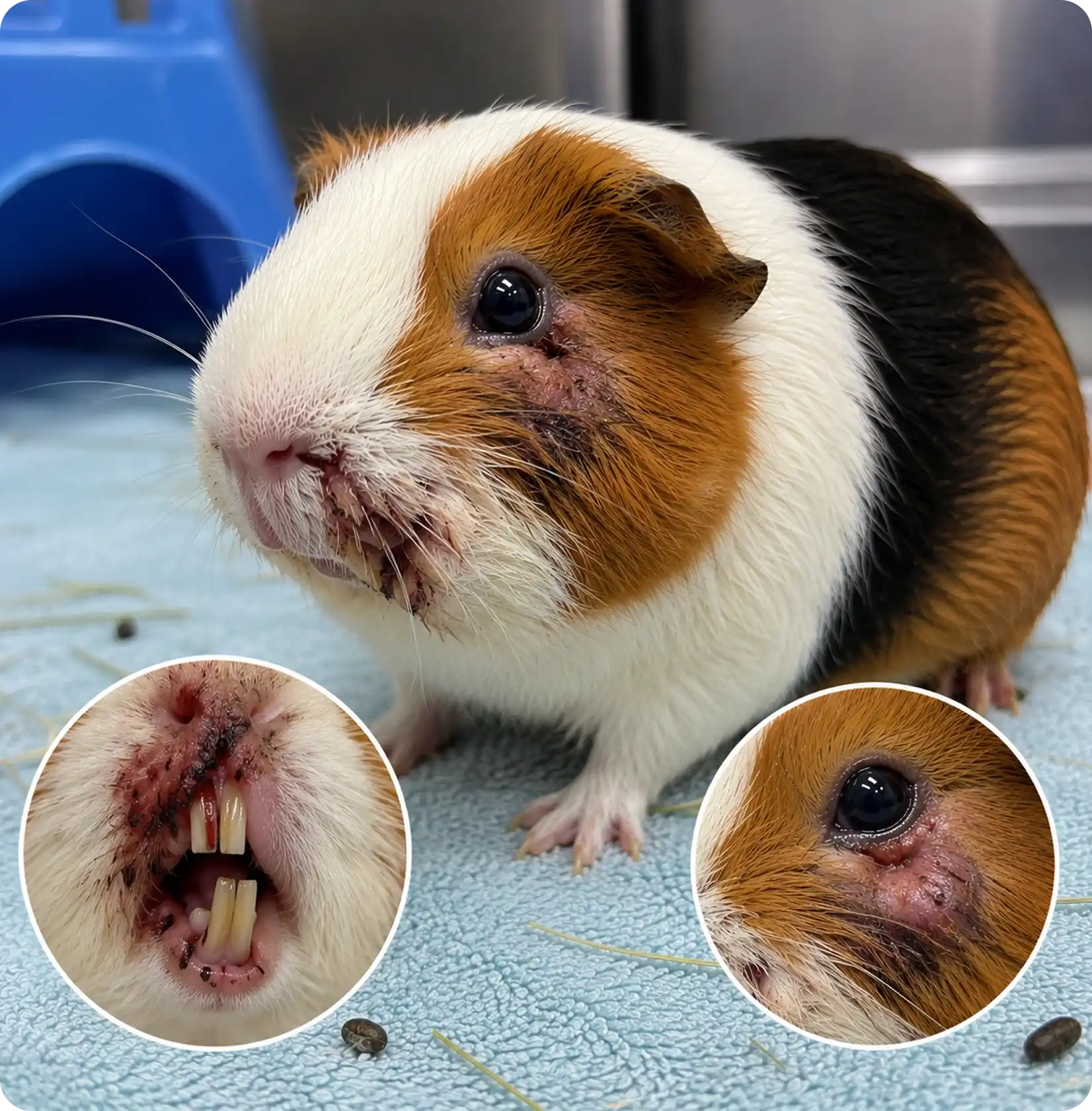
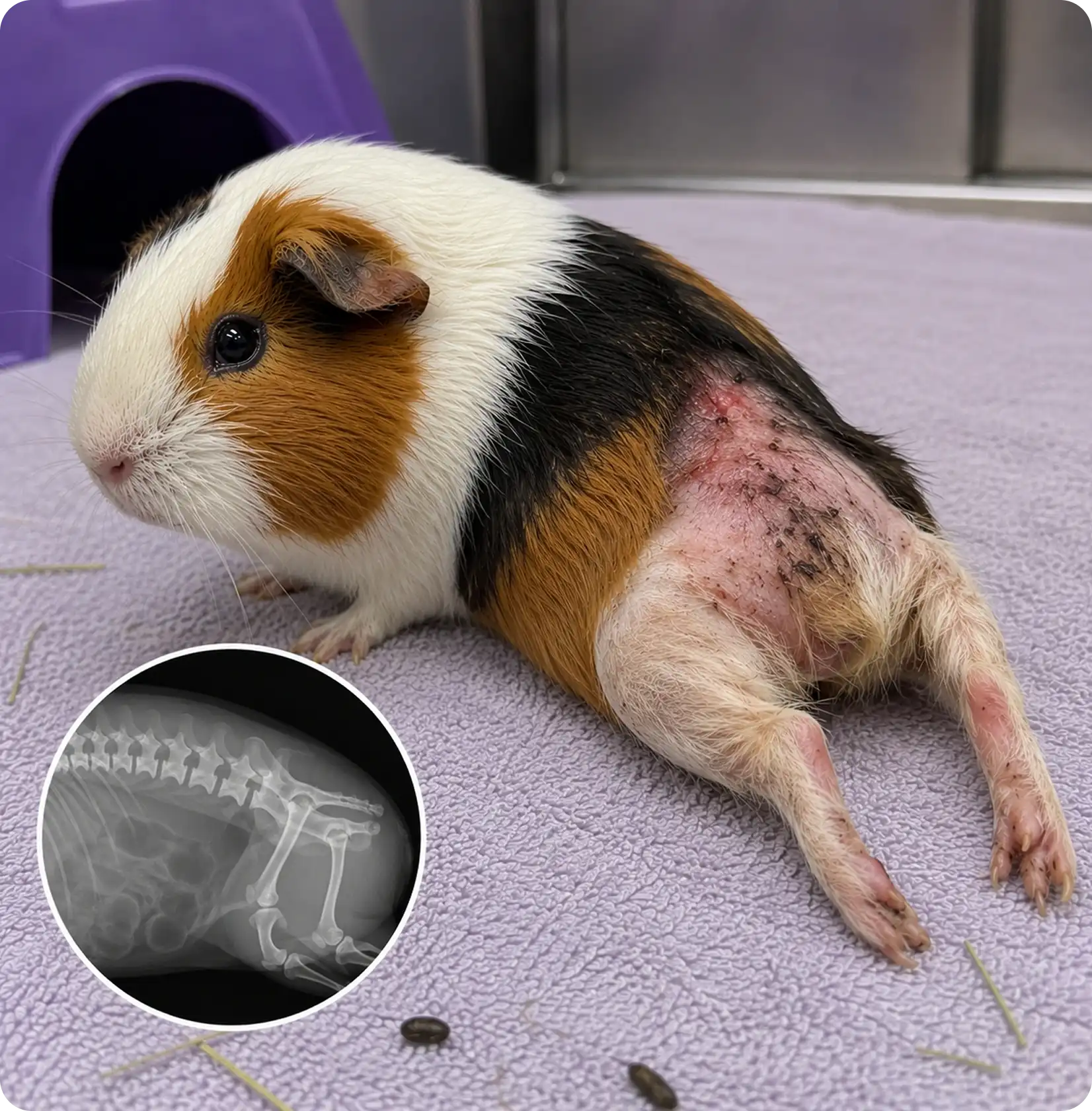
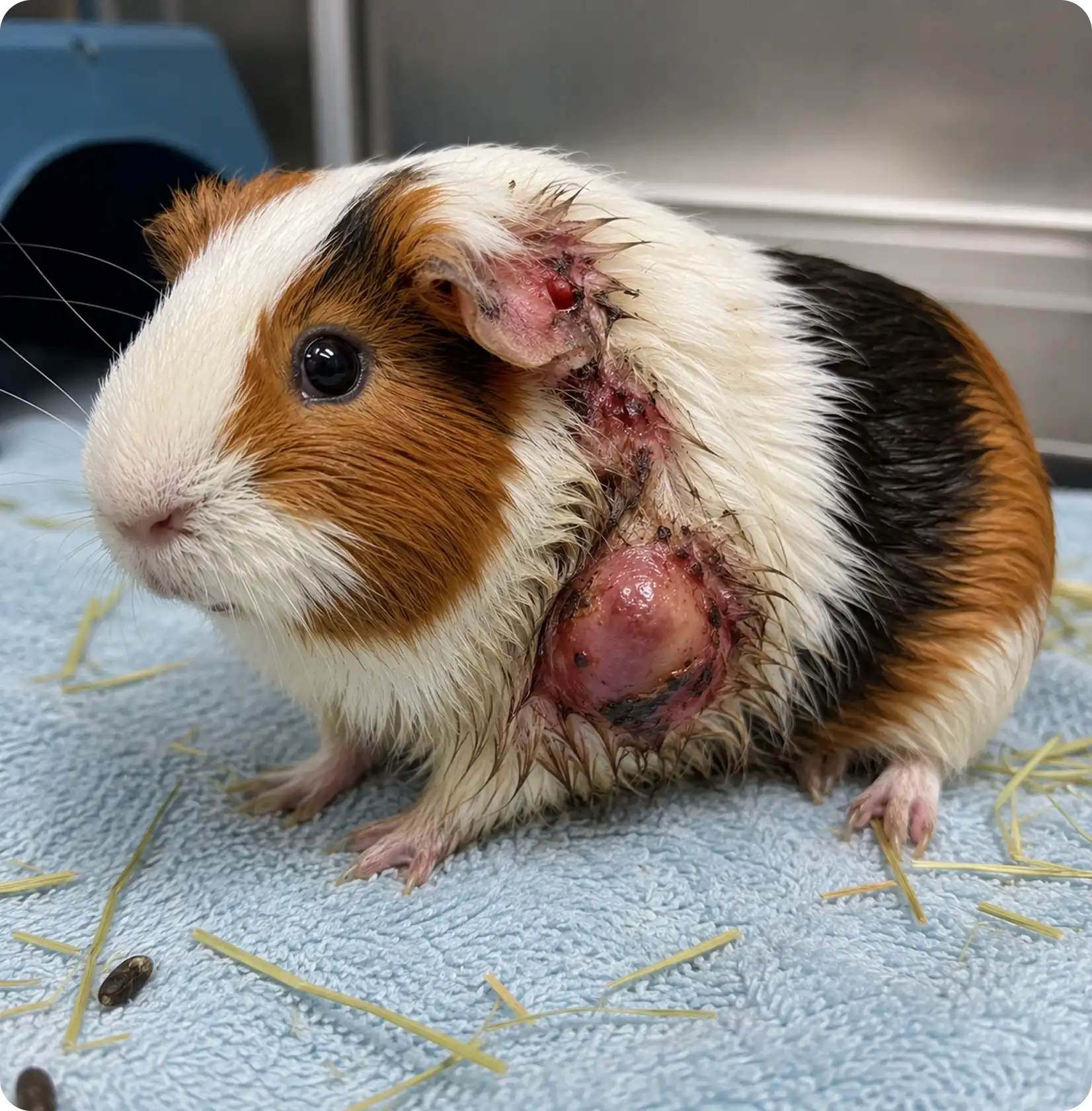
Common Types Of Injuries In Guinea Pigs
.webp)
.webp)
.webp)
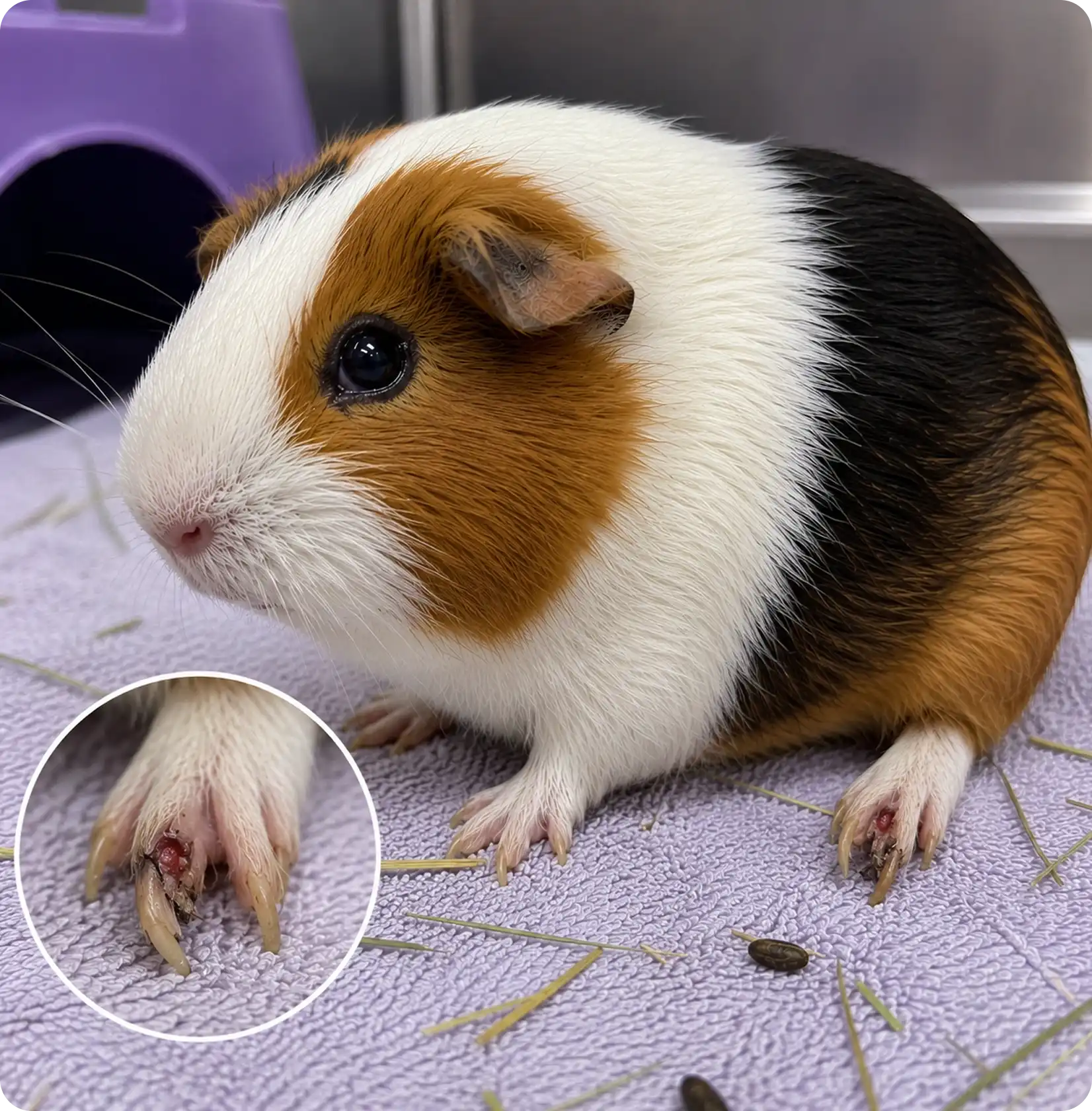
Common Signs Of Injuries And Wounds In Guinea Pigs

Limping or Reluctance to Bear Weight
Limping or lameness is commonly associated with joint luxation, fractures, pododermatitis or soft tissue injury requiring immediate veterinary assessment.

Bleeding or Open Wounds
Lacerations, visible haemorrhage, or puncture wounds can increase the risk of bacterial contamination and secondary wound infection.

Swelling and Localised Inflammation
Swelling and inflammation of soft tissues are indicators of trauma, bite wounds, fractures or subcutaneous abscesses.

Pain During Handling
Affected guinea pigs may vocalise, exhibit guarding behaviour, or resist handling due to musculoskeletal injury or severe wound pain.

Reduced Appetite and Activity
Systemic inflammation, pain or traumatic injury may lead to hyporexia, lethargy and decreased daily activity.

Purulent Discharge or Abscess Formation
Foul odour, thick purulent exudate or swelling suggests advanced bacterial infection.
Why Do Pet Parents Choose Conbun?

24/7 Availability
Access 24/7 vet consultation through our online pet health platform, ensuring expert veterinary support whenever your pet requires immediate medical guidance.

Response in 30s
Receive an Instant Vet Consultation for urgent concerns, or schedule a remote vet appointment to get digital pet health advice for non-urgent cases.

10k+ Happy Pet Parents
Trusted by Indian pet owners for compassionate remote animal care, expert consultations, and reliable veterinary guidance across diverse pet species.

100+ Verified Vets
Consult experienced BVSc & MVSc Vets through secure online vet consultation, delivering evidence-based treatment recommendations and personalised care for every pet.
24/7 Availability
Access 24/7 vet consultation through our online pet health platform, ensuring expert veterinary support whenever your pet requires immediate medical guidance.
Get Help For Your Pet In Just A Few Simple Steps
Install Conbun and create your pet’s profile so we can understand them better.
Describe symptoms, upload photos if needed, and get quick online pet health advice from verified vets.
Talk to a vet online in just 30 seconds or schedule an appointment for later.



How To Prevent Injuries And Wounds In Guinea Pigs?
Explore expert-backed care tips, health advice, and practical recommendations to help your guinea pig stay happy, healthy, and active every day.
Consult Now
Handle Your Guinea Pig Gently
Support the thorax (chest cavity) and hindquarters during handling to minimise falls, fractures, spinal trauma and other injuries.

House Compatible Guinea Pigs Together
Appropriate social pairing can reduce bite wounds, territorial aggression, abscess formation and stress-induced traumatic injuries within shared enclosures.

Use Safe, Non-Abrasive Flooring
Provide soft, dry bedding to minimise pododermatitis, pressure injuries and traumatic damage to footpads and nails.
Trim Nails at Regular Intervals
Regular nail trimming helps in preventing overgrowth, haemorrhage, altered gait, accidental tearing and secondary bacterial infection of damaged nail beds.

Remove Sharp or Hazardous Objects
Inspect the enclosure regularly and eliminate broken accessories, sharp edges and unsafe toys that may lead to lacerations or ocular trauma.

Schedule Routine Veterinary Examinations
Regular health assessments facilitate early detection of pododermatitis, musculoskeletal abnormalities, and wound complications before they become clinically significant.
Handle Your Guinea Pig Gently
Support the thorax (chest cavity) and hindquarters during handling to minimise falls, fractures, spinal trauma and other injuries.
House Compatible Guinea Pigs Together
Appropriate social pairing can reduce bite wounds, territorial aggression, abscess formation and stress-induced traumatic injuries within shared enclosures.
When To Consult A Vet For Guinea Pig Injuries?
Suspected Fracture or Joint Dislocation
Joint dislocation or fracture requires immediate orthopaedic assessment and pain management

Deep Bite Wounds or Abscesses
Deep bite wounds or abscesses require prompt antimicrobial therapy and surgical evaluation.

Persistent Bleeding from Any Wound
Persistent bleeding requires urgent veterinary treatment.
Suspected Fracture or Joint Dislocation
Joint dislocation or fracture requires immediate orthopaedic assessment and pain management
Deep Bite Wounds or Abscesses
Deep bite wounds or abscesses require prompt antimicrobial therapy and surgical evaluation.




Frequently Asked Questions
Keep the affected area clean. Minor wounds should be assessed promptly to prevent infection. Maintain a hygienic enclosure and prevent your guinea pig from contaminating the wound. Bite wounds or abscesses require veterinary examination, as guinea pig wound care includes pain relief, antibiotics, wound cleaning or even surgical management.
Signs of injury in guinea pigs include limping, swelling, bleeding, reluctance to move, abnormal posture, vocalising when handled, reduced appetite or visible wounds. A guinea pig leg injury may also result in the loss of weight-bearing capacity.
Maintain a quiet and warm environment and minimise handling until the guinea pig is assessed by a veterinarian. Do not administer human pain medications, as many are toxic to guinea pigs. Prompt treatment of the underlying injury is important to relieve pain and prevent complications.
Yes. Many guinea pigs recover well with early veterinary treatment. Guinea pig broken leg treatment involves external splinting, pain management when appropriate, restricted activity, or surgical stabilisation depending on the location and severity of the fracture.
Diluted povidone-iodine (Betadine) may be used for certain superficial wounds, but only under veterinary guidance because incorrect concentration or excessive use can delay healing or irritate healthy tissue. Proper Guinea pig wound care involves determining the underlying injury rather than relying solely on antiseptics. If your Guinea pig is limping, has a deep wound, persistent bleeding, or signs of infection, seek veterinary care immediately.
Conbun: Online Veterinary Care For Guinea Pig Injuries
Even minor injuries in guinea pigs can quickly become serious if left untreated. Bite wounds may develop into deep abscesses, fractures and can lead to permanent mobility issues. Untreated cuts increase the risk of bacterial infections. If you notice your guinea pig limping, bleeding, reluctant to move or showing signs of pain, seeking veterinary care at the earliest can drastically improve health outcomes.
Conbun helps you connect with an experienced exotic animal vet online who understands the specialised medical needs of guinea pigs. Whether your pet has suffered a traumatic injury, a foot lesion, an eye injury or a suspected fracture, get expert guidance with Conbun to take the right steps immediately.
Our veterinary consultation app makes it simple to access professional veterinary advice from the comfort of your home. Through our vet clinic online services, qualified veterinarians can evaluate your guinea pig’s symptoms, recommend appropriate first aid, and advise when emergency in-person treatment is required.
Book an Online vet consultation for your guinea pig today with Conbun and ensure your pet receives timely, expert care to relieve pain, prevent complications, and support a safe, healthy recovery.