

Written by: Anand Sen; Reviewed by: Dr. Parth Patel (B.V.Sc & A.H., M.V.Sc)
Hearing that your dog has bladder cancer can make the world tilt off its axis. While learning about Transitional Cell Carcinoma (TCC) is overwhelming, it is important to know that this condition is manageable. With proper medical care, strategic pain management, and dedicated emotional support, many dogs continue to live comfortable, happy lives for months or even years.
One day, your world is filled with the rhythmic sound of a tail against the floor and the familiar jingle of a collar. Next, it becomes quiet with you sitting in a veterinary clinic, the air heavy with words that feel like a foreign language: Transitional Cell Carcinoma, ultrasound findings, oncology protocols, etc
While you may leave that appointment with a blur of papers, one haunting question comes with you echoing in your heart: “How do I help my dog with bladder cancer?”
Veterinarians and oncologists see these heartbreaks often. But in the quiet corners of exam rooms, they also see something incredibly powerful, the deep, wordless bond between a dog and the human who would move mountains for them.
Your dog doesn't know what a diagnosis or cancer is; The only thing they know is that you are there, that your hand is on their head, and that they are loved. All this is enough for a dog.
The truth is that bladder cancer in dogs is rarely curable. However, one relieving aspect is that it is often manageable. With proper medical care, pain management, favourite treats, tonnes and tonnes of love and emotional support, many dogs can enjoy months and sometimes years of meaningful life.
This guide will walk you through:
What is bladder cancer in dogs
Treatment options commonly used by veterinarians
How you can keep a dog comfortable at home
What you should expect as the disease progresses
Most importantly, it will help answer the question every pet parent asks:
“What can I do right now to help my dog?”
Understanding Bladder Cancer in Dogs
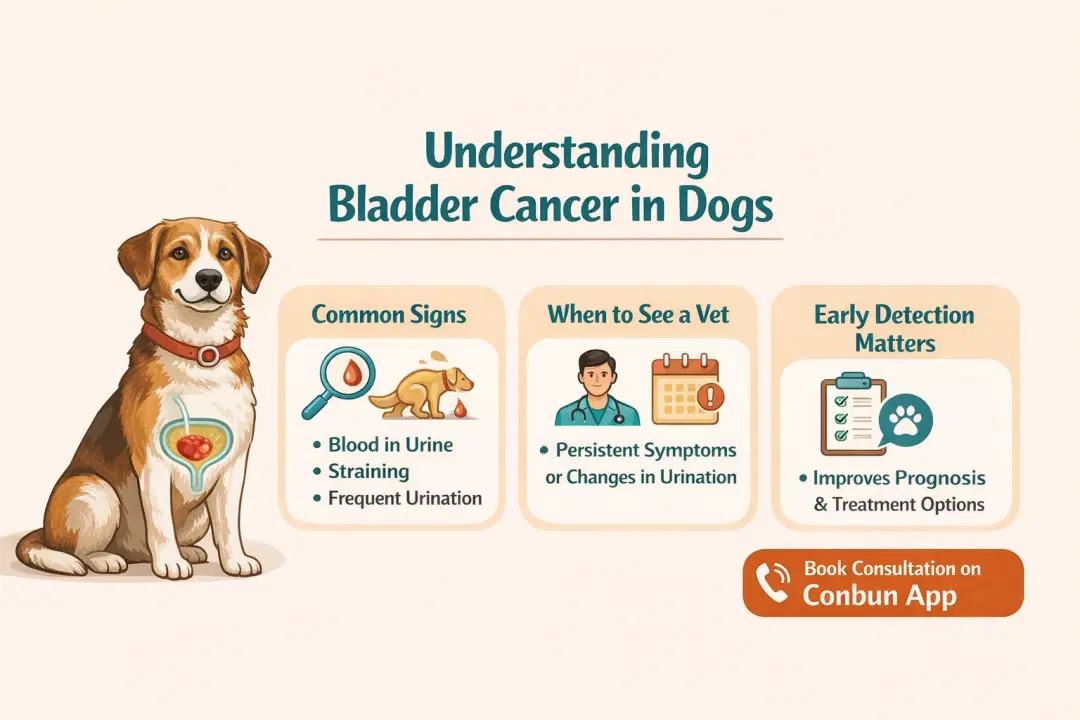
What is transitional cell carcinoma in dogs (TCC)
Bladder cancer in dogs most commonly appears as a type of tumour called Transitional Cell Carcinoma (TCC).
TCC develops in the inner lining of the urinary bladder and continually grows near an area known as the trigone. This is the region where urine enters and exits the bladder.
Unfortunately, due to its complicated location, surgical removal of TCC becomes incredibly difficult in many cases.
According to veterinary oncology literature published by the Veterinary Cancer Society, transitional cell carcinoma accounts for more than 90% of bladder tumours in dogs.
Key symptoms of Bladder Cancer in Dogs
One of the most common reasons for delays in the diagnosis of bladder cancer in dogs is its resemblance to urinary tract infections. Many pet owners think it is a simple UTI, which leads to progression of the disease and delays in treatment.
Early signs of bladder cancer in dogs include:
Blood in urine (dog with bladder cancer peeing blood)
Frequent urination
Straining to urinate
House accidents even in well-trained dogs
Excessive licking of the genital area
Discomfort during urination
Many dogs are initially treated for urinary infections before the underlying cancer is discovered.
While a traditional physical visit is advised in such cases, if it is not possible you can also opt for an online pet care consultation on the Conbun app to connect with a veterinary oncologist and understand the symptoms till a physical vet visit is arranged.
How Veterinarians Diagnose Bladder Cancer
Veterinarians may use various tools and techniques to detect bladder cancer.
Ultrasound imaging
Ultrasound imaging is one of the most common techniques that allows vets to visualise masses or abnormal growth within the bladder and surrounding tissues.
BRAF mutation test
The BRAF mutation test is a urine-based genetic test that detects a mutation which is commonly associated with canine TCC.
Cystoscopy or biopsy
In some cases where vets have difficulties in detecting bladder cancer, tissue samples are collected to confirm the diagnosis.
All these tests help veterinarians determine the location, speed, and spreading of the tumour and explore treatment options.
While diagnosis may be overwhelming for many pet parents, understanding this bladder cancer is the first step you can take towards helping your dog.
Treatment Options for Dog Bladder Cancer
Treatment Type | Primary Purpose | Common Medications/Procedures |
Palliative Care | Slows tumor growth & reduces inflammation | Piroxicam (NSAID) |
Chemotherapy | Extends survival time while maintaining comfort | Mitoxantrone + Piroxicam |
Targeted Therapy | Inhibits blood supply to the tumor | Palladia (Toceranib) |
Radiation / Surgery | Reduces localized pain and improves urine flow | Laser ablation, Palliative radiation |
Treatment for dogs with bladder cancer typically revolves around two goals:
Slowing tumour growth
Preserving quality of life
Because TCC tumours often develop in delicate areas of the bladder, treatment strategies are usually medical rather than surgical.
As TCC tumours often develop near delicate areas of the bladder, treatment options are usually better than surgical.
Medical / Pharmaceutical Treatments
Piroxicam
Piroxicam is one of the most widely used medications for bladder cancer in dogs, and it is generally the first-line palliative treatment. It is a medicine that belongs to a group of medications called NSAIDs (non-steroidal anti-inflammatory drugs).
According to the Journal of Veterinary Internal Medicine, piroxicam can slow tumor growth in many dogs with TCC. The study also found that 15–20% of dogs experience measurable tumor shrinkage.
However, for advanced cases, veterinarians generally recommend chemotherapy protocols.
Chemotherapy protocols - Mitoxantrone + Piroxicam
While this treatment does not cure bladder cancer, it can significantly extend the survival time while maintaining quality of life.
Targeted therapy - newer options (Palladia/toceranib)
Many dogs have also been observed to benefit from targeted therapies like Toceranib (Palladia). It is an effective medication that is designed to inhibit the blood supply to tumor.
Surgical Options
While surgery is possible in dogs with bladder cancer, it depends heavily on the location of the tumour.
As stated above, bladder cancers in dogs form in the trigone region, where the critical urinary apparatus meets. Thus, removing tumours from this area, without affecting bladder function, is extremely challenging.
In select cases, advanced procedures such as laser ablation or cystoscopy-guided tumor debulking may be performed.
These procedures aim to reduce tumor size and improve urine flow, rather than cure the disease.
Radiation Therapy
Another popular treatment option in veterinary oncology for bladder cancer in dogs is radiation therapy.
Two approaches may be considered:
Palliative radiation: Focuses on reducing tumor discomfort and improving urination
Curative-intent radiation: An aggressive protocol that is only available at specialised centres
Radiation therapy generally involves multiple sessions over several weeks. It may cause temporary side effects like irritation of the bladder or surrounding tissues.
However, for dogs with complicated cases, this treatment model can significantly improve quality of life and extend life expectancy.
How to Help Your Dog Feel Comfortable at Home
Medical treatment is one part of caring for a dog with bladder cancer. The other part, which is also equally important, happens at home.
Comfort care focuses on maintaining dignity, minimising pain, and preserving the joy in your dog’s daily life.
Dogs with bladder cancer don’t think about survival statistics. They only think about the next walk with you, the next snack, the next moment beside their favourite human.
Veterinary palliative care focuses on reducing pain and maintaining quality of life.
Here are practical ways you can help.
Pain Management
Pain can appear subtly in dogs. Watch for signs such as:
Restlessness
Panting without exercise
Reluctance to move
Whining when urinating
Veterinarians often prescribe medications such as NSAIDs (like piroxicam). These are sometimes combined with gabapentin or opioids in later stages for pain management.
Never offer your dog human painkillers.
Diet & Hydration
dog nutrition requirements are interconnected, and it even plays a supportive role in managing cancer.
Veterinary nutritionists often recommend:
High-protein diets to maintain muscle mass
Omega-3 fatty acids (fish oil) for anti-inflammatory support
Highly digestible foods
Encouraging hydration is also critical because dogs with bladder cancer may urinate more frequently.
You can also add water or low-sodium broth to meals to increase fluid intake.
Managing Urinary Accidents
Dogs with bladder cancer do not have control over their bladder. Instead of viewing accidents as setbacks, think of them as signals telling your dog needs more support.
Helpful adjustments include:
More frequent outdoor breaks
Washable bedding
Dog diapers for overnight comfort
Don’t think that your dog is being difficult to control; their body is simply struggling.
Patience and compassion are incredibly important.
Gentle Exercise & Mental Stimulation
Ceasing physical activity completely would be a bad idea. Go on short walks and make them indulge in simple enrichment activities. Offer their favourite toys for dogs to keep them busy in help maintain their blood circulation, appetite, and mood.
Veterinary research shows that maintaining daily routines can reduce stress in chronically ill pets.
Ensure that the activities are low-impact and enjoyable. If your dog still wags their tail for a walk, that joy matters.
Monitoring Your Dog's Progress
The progression of bladder cancer is gradual. Regular monitoring of a dog’s condition can help veterinarians adjust treatment plans.
Your vet may recommend:
Follow-up ultrasounds every few months to monitor the growth of the tumor
Blood tests to monitor medication effects
Urine tests for secondary infections
At home, keep a symptom journal tracking:
Urination frequency
Appetite changes
Energy levels
Pain indicators
Making Quality-of-Life Decisions
One of the most difficult parts of caring for a dog with bladder cancer is deciding when comfort outweighs treatment.
Veterinarians often use the HHHHHMM Quality-of-Life Scale, which evaluates:
Hurt
Hunger
Hydration
Hygiene
Happiness
Mobility
More good days than bad
This is an effective framework that helps families make compassionate decisions.
Palliative care or hospice support may become appropriate when the focus shifts from extending life to preserving dignity and comfort.
No dog parent in this world is ever fully ready for this moment, but veterinarians help them to guide them through such tough decisions.
Support Resources for Pet Owners
Facing a cancer diagnosis can feel isolating.
Fortunately, support networks exist for pet families navigating this journey.
Helpful resources include:
Veterinary Cancer Society
Canine Cancer Alliance
Online pet cancer support groups
Your veterinarian can also help you locate a board-certified veterinary oncologist if advanced treatment options are available.
Conclusion
Hearing that their dog has bladder cancer can be incredibly painful for pet parents. But with the right treatment, comfort care, and love, many dogs continue to enjoy meaningful days with their families. If you’re unsure about the next step, consider an best online vet consultation india on Conbun android and iOS to speak with a veterinary oncologist who can guide you through treatment options and help you make the most compassionate decisions for your dog.
Frequently Asked Questions
1. Can bladder cancer in dogs be cured?
Answer. Most cases of transitional cell carcinoma in dogs cannot be cured. However, treatment can indeed slow tumor growth and improve quality of life.
2. What are the first signs of bladder cancer in dogs?
Answer. Common early symptoms of bladder cancer in dogs include blood in urine, strain while urinating, frequent urination, and house accidents.
3. How long can a dog live with bladder cancer?
Answer. With effective treatment such as piroxicam or chemotherapy and lifestyle adjustments, many dogs can live up to 6–12 months or longer. However, life expectancy still depends on disease progression.
4. Is bladder cancer painful for dogs?
Answer. Yes, especially in advanced stages. Veterinarians prescribe pain management medications, which can significantly improve comfort.
5. What should I feed a dog with bladder cancer?
Answer. For a dog with bladder caner it is recommended that you feed high-quality protein, supplements containing omega-3 fatty acids, easily digestible foods and proper hydration.
High-quality, easily digestible proteins to maintain muscle mass.
Omega-3 fatty acids (like high-quality fish oil) for anti-inflammatory benefits.
Increased hydration by adding low-sodium broth or water to dry kibble.
6. When should I consider euthanasia for a dog with bladder cancer?
Answer. If pain and suffering cannot be controlled and quality of life declines significantly, veterinary can help you make such tough decisions.